Rodolfo Escalera
Mexico, b. 1929, d. 2000
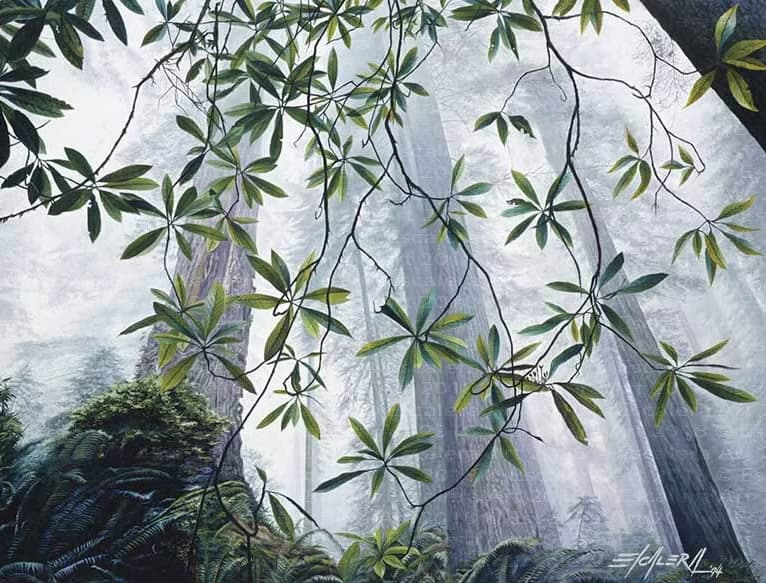
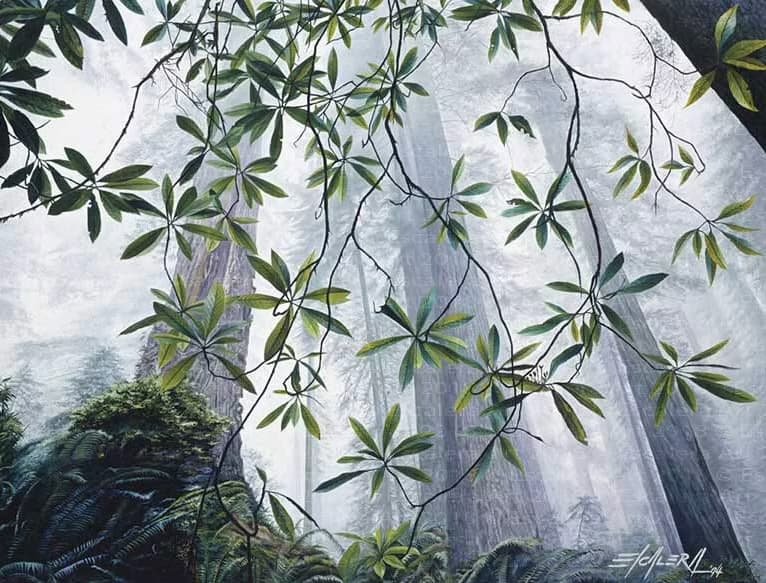
Rodolfo Escalera was a Mexican painter born in 1929 who developed a distinctive body of work rooted in landscape, atmosphere, and a deeply personal response to the natural environment. Over the course of his career, he became known for his expressive handling of paint, his sensitivity to light and terrain, and his ability to translate the Mexican landscape into compositions that feel both grounded and reflective. His work occupies a space between representation and interpretation, capturing not just the appearance of a place, but its mood and presence.
Escalera was born in Mexico and pursued formal training in the visual arts at a time when Mexican painting was still influenced by the legacy of muralism. While that tradition emphasized social themes and large scale narratives, Escalera moved in a quieter direction. He focused on landscape as a central subject, drawn to its capacity for introspection and its connection to memory and perception. His training provided him with a solid technical foundation, but his mature work reflects a gradual move toward a more expressive and individual approach.
Throughout his career, Escalera explored a range of landscapes, often depicting rural environments, open terrain, and natural formations. His compositions are typically structured yet fluid, balancing recognizable forms with a sense of movement and atmosphere. Hills, trees, and horizons appear in his work not as rigid elements, but as evolving shapes that interact with light and color. This approach allows his paintings to feel alive, as if they are shaped by changing conditions rather than fixed in a single moment.
One of the defining qualities of Escalera’s work is his use of color. He often worked with earthy tones, greens, ochres, and muted blues, building surfaces that suggest depth and variation. His color choices reflect the Mexican landscape while also contributing to the emotional tone of each piece. Rather than using color for dramatic contrast, he relied on subtle shifts and layering to create atmosphere. This gives his work a sense of continuity, where forms seem to emerge gradually from the surface.
His brushwork plays an important role in shaping the character of his paintings. Escalera often applied paint in a way that emphasizes texture and movement, allowing the surface to retain visible traces of the process. This tactile quality adds to the sense of immediacy, making the viewer aware of both the image and the act of its creation. The balance between control and spontaneity is central to his style, with each painting reflecting a careful yet responsive approach.
Although his work remains connected to the tradition of landscape painting, Escalera’s approach is not purely descriptive. He was interested in how landscape can be experienced rather than simply observed. His paintings often suggest a quiet engagement with place, where the viewer is invited to reflect rather than simply look. This emphasis on perception gives his work a contemplative quality that distinguishes it from more narrative or decorative approaches.
Escalera exhibited his work in Mexico and internationally, gaining recognition among collectors and institutions that value his consistent and thoughtful practice. While he may not have sought the visibility of more prominent figures, his work has maintained a steady presence and continues to be appreciated for its clarity and depth. Rodolfo Escalera died in 2000. Today, he is remembered as a painter who approached landscape with sensitivity and discipline, creating works that reflect both the physical and emotional dimensions of the natural world. His legacy lies in his ability to transform familiar environments into spaces of quiet reflection, using color, texture, and composition to convey a lasting sense of place.
Represented By
Artworks by Rodolfo Escalera