María Luisa Pacheco
Bolivia, b. 1919, d. 1982
María Luisa Pacheco was a Bolivian painter born in 1919 who became one of the most important figures in twentieth century Bolivian art. Her work is recognized for its evolution from figurative and indigenist themes toward a powerful and highly personal form of abstraction. Over the course of her career, she developed a visual language that reflected both the cultural identity of Bolivia and the broader movements of modern art, while maintaining a strong connection to landscape, memory, and material presence.
She was born in La Paz, Bolivia, into a culturally active environment that encouraged intellectual and artistic exploration. Her father was a writer and journalist, and this background exposed her early to literature, history, and political thought. She began her artistic training in Bolivia, studying drawing and painting while also engaging with the country’s artistic traditions. In her early work, she was influenced by indigenism, a movement that emphasized Indigenous subjects, social realities, and national identity. These early paintings often depicted Andean people, daily life, and the landscapes of Bolivia with a sense of structure and dignity.
As her career developed, Pacheco traveled and spent extended time abroad, including in Europe and the United States. These experiences expanded her artistic perspective and introduced her to modernist movements that were reshaping painting internationally. While she absorbed these influences, she did not abandon her roots. Instead, she began to transform them. Her work gradually moved away from direct representation and toward abstraction, but the presence of landscape remained central.
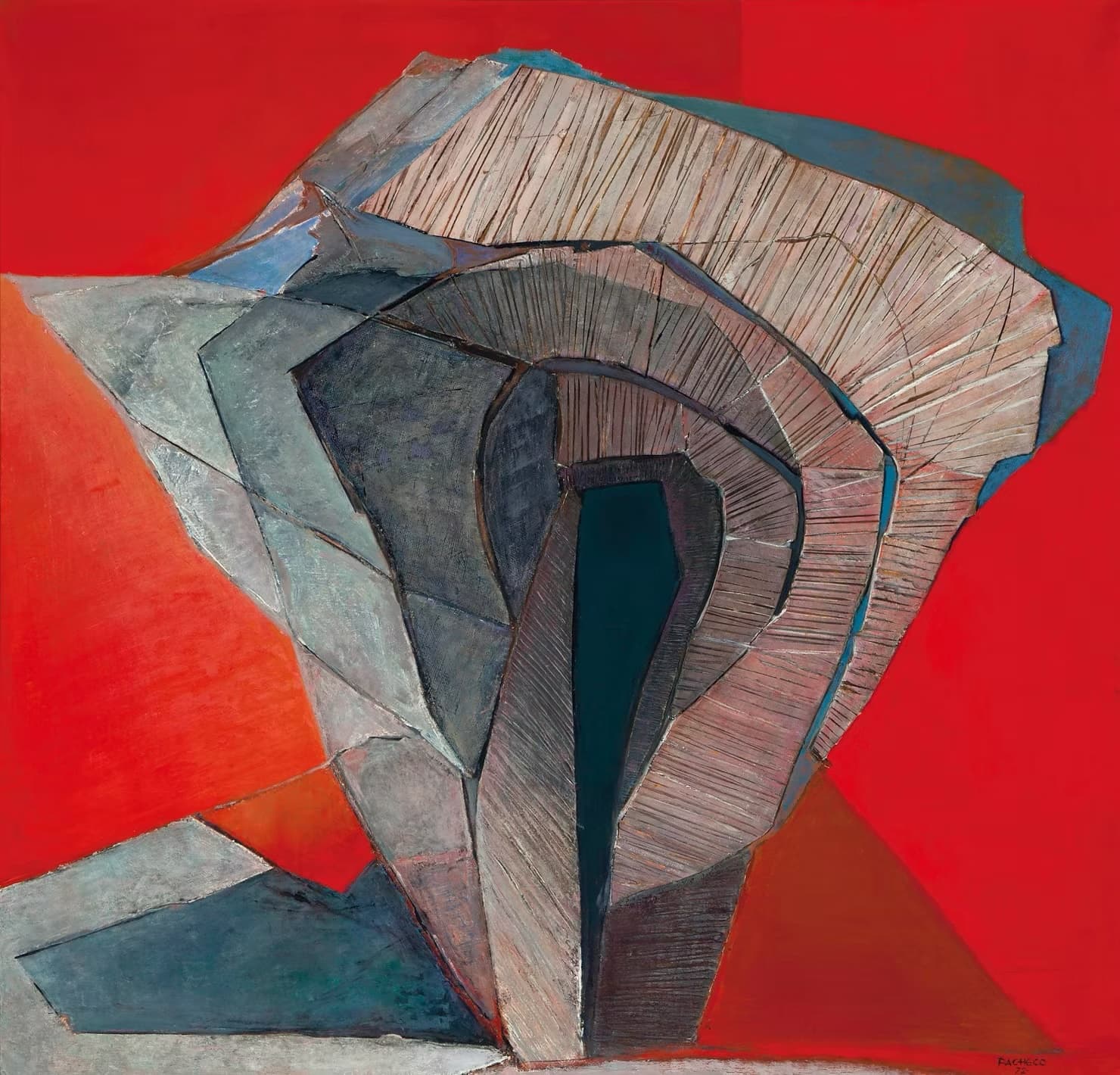
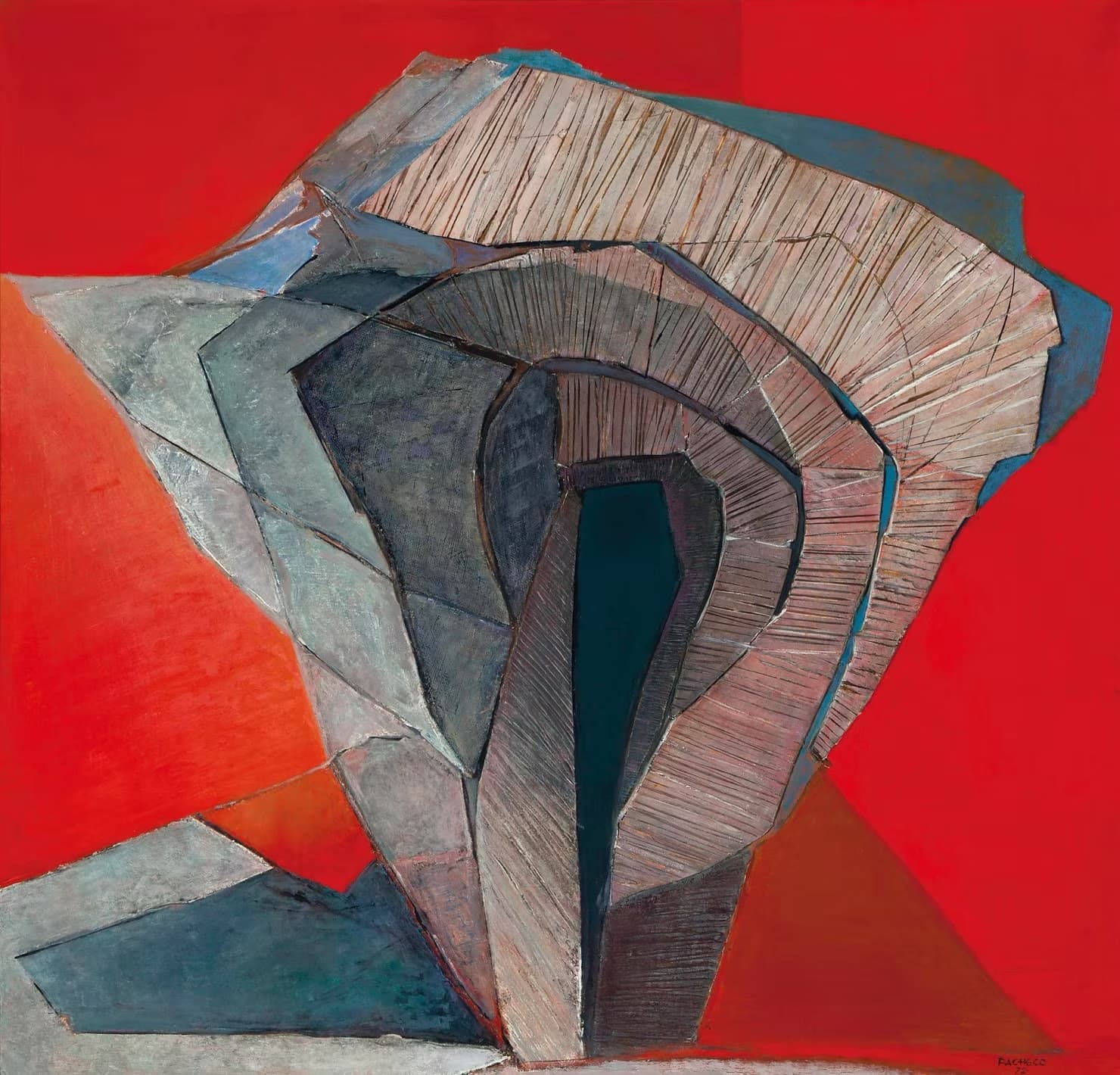
By the 1950s and 1960s, Pacheco had entered her most mature phase, developing the abstract style for which she is best known. Her paintings from this period often evoke the textures, colors, and geological formations of the Bolivian terrain. Rather than depicting mountains, earth, or rock formations in a literal way, she translated them into layered compositions built from fragments, planes, and gestural marks. Her surfaces often appear constructed, as if assembled from pieces of the land itself. This gives her work a strong physical presence and a sense of weight.
Material played an important role in her process. She frequently experimented with texture, using techniques that created depth and variation across the surface of the canvas. The result is work that feels both visual and tactile. Her color palette often reflects the tones of the Andean environment, with earthy browns, deep reds, grays, and muted blues arranged in a way that suggests both structure and movement. These elements combine to create compositions that feel grounded and expansive at the same time.
Although her work became abstract, it never lost its connection to place. Pacheco’s paintings can be understood as interpretations of landscape rather than representations of it. They carry the memory of terrain, the rhythm of natural formations, and the emotional resonance of environment. This balance between abstraction and reference is one of the defining qualities of her work.
Throughout her career, María Luisa Pacheco exhibited internationally and gained recognition as a significant voice in Latin American modern art. She spent time in the United States, where she continued to develop her work and engage with contemporary artistic dialogue. Despite her international presence, her work remained deeply tied to Bolivia, both visually and conceptually.
María Luisa Pacheco died in 1982. Today, she is remembered as a pioneering Bolivian artist who expanded the possibilities of painting by merging landscape, abstraction, and material exploration. Her work stands as a bridge between cultural identity and modern expression, offering a powerful interpretation of place through form, texture, and color.
Represented By
Artworks by María Luisa Pacheco