Alfredo Ramos Martinez
Mexico, b. 1871 – d. 1946
Alfredo Ramos Martínez was a pioneering Mexican painter, muralist, and educator widely regarded as a forerunner of the Mexican Modernist movement. Born on November 12, 1871, in Monterrey, Mexico, he demonstrated artistic talent early in life and pursued formal training at the Escuela Nacional de Bellas Artes in Mexico City. His early promise earned him a scholarship from the Mexican government, allowing him to continue his studies in Paris at the prestigious Académie Julian. There, he was exposed to European artistic currents such as Impressionism and Symbolism, influences that would later merge with his deep connection to Mexican culture and identity.
During his years in Europe, Ramos Martínez gained recognition in Parisian art circles, exhibiting alongside notable artists and earning critical acclaim. His work from this period reflected a refined academic technique combined with a sensitivity to light and atmosphere. However, despite his success abroad, he remained deeply connected to Mexico, and the outbreak of the Mexican Revolution in 1910 prompted his return home. This transition marked a turning point in his artistic vision, as he began to shift away from European styles and toward themes rooted in Mexican life, particularly the dignity and resilience of Indigenous people.
Back in Mexico, Ramos Martínez became an influential figure in the country’s cultural and educational transformation. He served as director of the National School of Fine Arts and later founded the Open-Air Schools of Painting, an innovative initiative that rejected rigid academic traditions in favor of creative freedom and accessibility. These schools encouraged students—many from working-class and Indigenous backgrounds—to paint outdoors and draw inspiration from their surroundings. This approach played a crucial role in democratizing art education in Mexico and laid the groundwork for the broader Mexican muralist movement that would later include figures such as Diego Rivera and José Clemente Orozco.
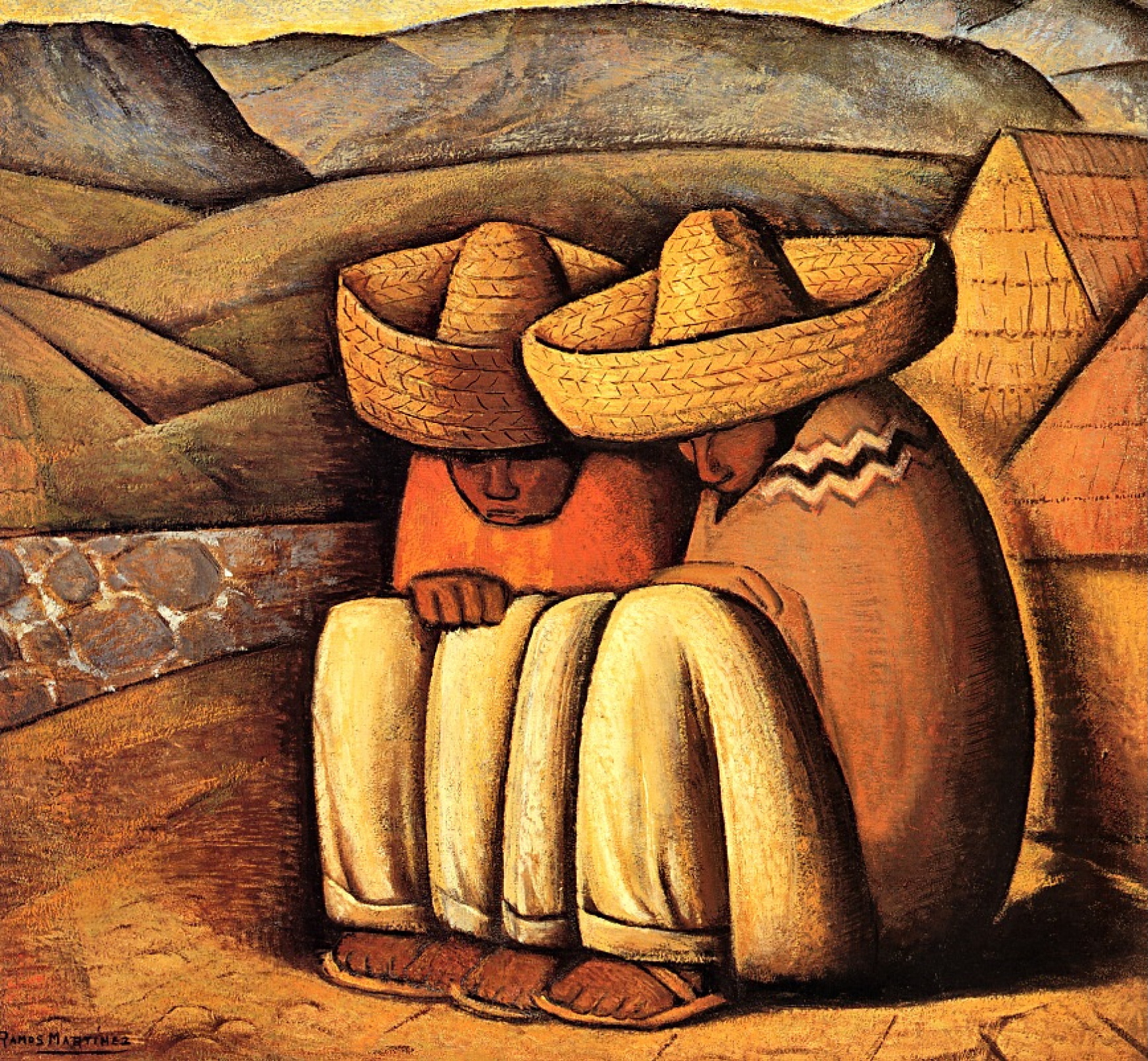
Ramos Martínez’s artistic style evolved into a distinctive synthesis of modernism and traditional Mexican aesthetics. He became best known for his serene, stylized portraits of Indigenous women, often depicted in calm, contemplative poses and adorned with traditional clothing and flowers. These works emphasized form, color harmony, and emotional depth rather than narrative complexity. Unlike some of his contemporaries, who focused on political and social upheaval, Ramos Martínez conveyed a quieter, more poetic vision of Mexican identity. His use of soft lines, flattened perspective, and decorative elements reflects both his European training and his admiration for pre-Columbian and folk art traditions.
In 1929, Ramos Martínez relocated to the United States, settling in Los Angeles, California. This move marked the beginning of a new phase in his career, during which he became a central figure in the Southern California art scene. He continued to paint and also executed several murals, bringing elements of Mexican modernism to a broader audience. Among his notable works from this period are murals commissioned for public and private spaces, including those that celebrate themes of labor, nature, and cultural heritage. His presence in California helped bridge artistic traditions between Mexico and the United States, influencing generations of artists in both countries.
Despite facing personal challenges, including the loss of his daughter and struggles with health, Ramos Martínez remained dedicated to his art throughout his life. His later works retained the elegance and spiritual calm that defined his mature style, often focusing on motherhood, rural life, and timeless human themes. He passed away on November 8, 1946, in Los Angeles, leaving behind a rich legacy that continues to resonate in the history of modern art.
Today, Alfredo Ramos Martínez is recognized as a key transitional figure who helped shape modern Mexican art while maintaining a unique and independent vision. His contributions as both an artist and educator were instrumental in redefining artistic identity in post-revolutionary Mexico. His works are held in major collections and museums across Mexico and the United States, and his influence can be seen in the continued appreciation for art that honors cultural heritage while embracing modern expression.
Represented By
Artworks by Alfredo Ramos Martinez