César Álvarez Dumont
Spain, b. 1866 – d. 1945
César Álvarez Dumont was a Spanish painter born in 1866 who became known for his historical scenes, literary subjects, and refined academic style. Working during the late nineteenth and early twentieth centuries, he developed a body of work that reflects the traditions of academic painting while also demonstrating a sensitivity to narrative, character, and atmosphere. His paintings often draw from history, literature, and everyday life, presented with careful composition and technical precision.
Álvarez Dumont was born in Portugal, a city with a strong artistic heritage that influenced his early development. He pursued formal studies at the Academia de Bellas Artes de San Carlos, where he received rigorous training in drawing and painting. This academic environment emphasized discipline, proportion, and mastery of technique, all of which are evident in his later work.
Seeking further artistic growth, he continued his studies in Madrid, where he was exposed to a broader range of influences and opportunities.
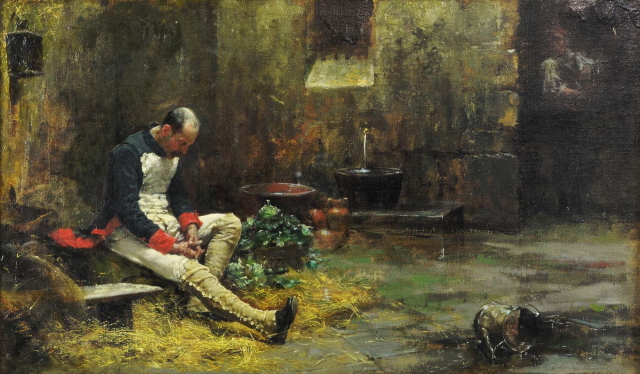
Like many artists of his time, Álvarez Dumont benefited from travel and exposure to European artistic centers. His experiences abroad allowed him to study classical and contemporary works, deepening his understanding of composition and narrative painting. These influences helped shape his mature style, which combines academic structure with a strong sense of storytelling. A defining feature of his work is his attention to detail and composition. Álvarez Dumont often created carefully arranged scenes in which figures, objects, and settings are balanced to guide the viewer’s eye. His paintings frequently depict moments of action or emotional tension, capturing a narrative at a specific point in time. This ability to suggest a larger story within a single image is one of his strengths as a painter.
He was particularly drawn to historical and literary themes, subjects that allowed him to explore drama, character, and setting. His works often include richly detailed interiors, period costumes, and expressive gestures, all rendered with a high level of craftsmanship. At the same time, he painted scenes of everyday life, approaching them with the same level of care and attention.
Color in his work is used with control and purpose. He often employed a balanced palette, using contrasts of light and shadow to create depth and focus. His handling of light contributes to the atmosphere of his paintings, highlighting key elements while maintaining overall harmony within the composition.
Throughout his career, Álvarez Dumont exhibited his work in Spain and participated in important artistic events, gaining recognition for his technical skill and narrative ability. His paintings were appreciated for their clarity, structure, and ability to engage viewers through both visual and thematic elements.
Although he worked within the framework of academic painting, Álvarez Dumont’s work reflects a broader interest in storytelling and human experience. His paintings are not only exercises in technique but also explorations of character and situation. This combination of skill and narrative sensitivity gives his work lasting appeal.
César Álvarez Dumont died in 1945. Today, he is remembered as a representative of Spanish academic painting whose work captures both the discipline of his training and the expressive possibilities of narrative art. His legacy lies in his ability to combine technical precision with a strong sense of storytelling, creating images that continue to engage viewers through their detail and composition.
Represented By
Artworks by César Álvarez Dumont