Francisco Toledo
Mexico, b. 1940 – d. 2019
Francisco Benjamín López Toledo (July 17, 1940 – September 5, 2019) was a Mexican artist of Zapotec heritage, born in Mexico City and raised in Oaxaca. Widely regarded as one of the most important contemporary Mexican artists, his career spanned more than seven decades and encompassed painting, printmaking, sculpture, ceramics, drawing, and weaving. He is often associated with the post-muralist “Breakaway Generation,” which moved beyond the dominant traditions of Mexican muralism toward more personal and experimental forms of expression.
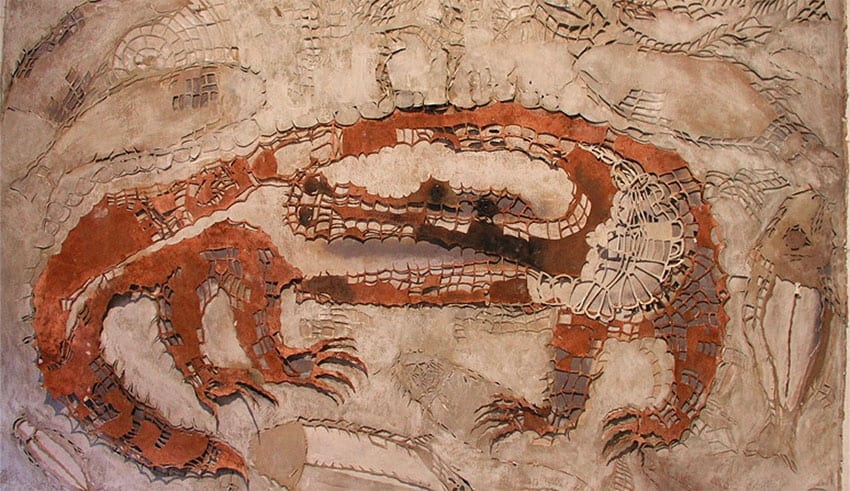
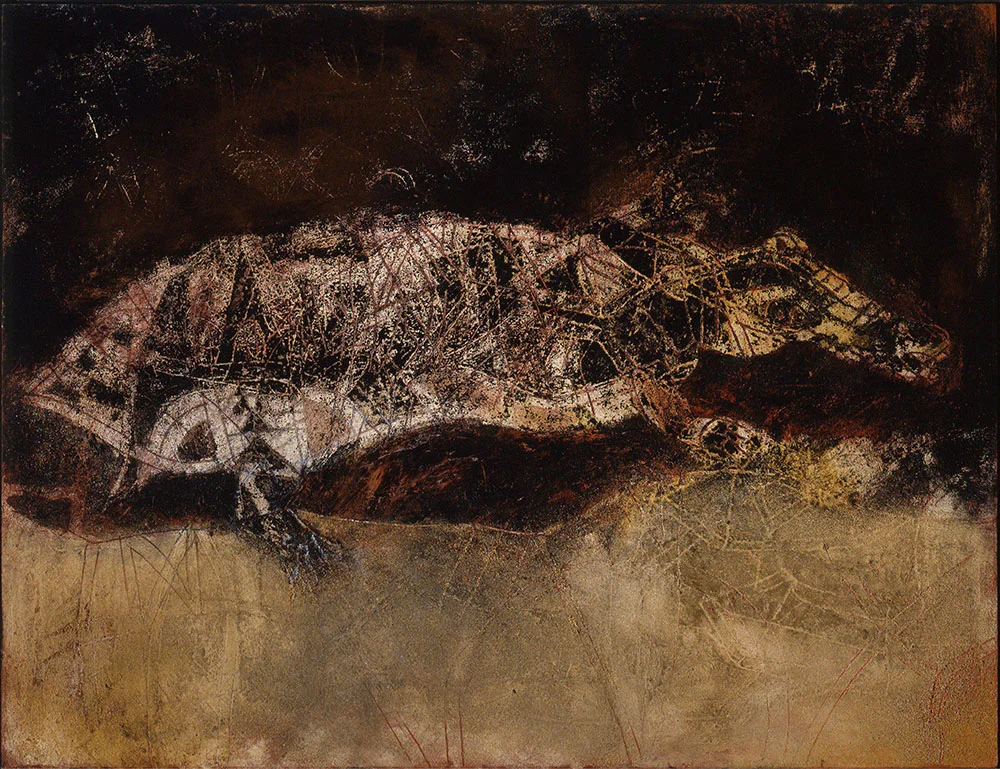
Toledo’s work is deeply rooted in the cultural and natural landscape of Oaxaca, drawing heavily on indigenous Zapotec traditions, mythology, and cosmology. His imagery frequently features hybrid human-animal figures, insects, reptiles, and plant life, creating a visual language that blurs the boundaries between the natural and human worlds. Themes of transformation, ritual, sexuality, and the interconnectedness of life recur throughout his work, often rendered with a tactile sensitivity to materials and surface.
A highly versatile and experimental artist, Toledo worked across a wide range of media, with printmaking standing out as a particularly significant aspect of his practice. His prints demonstrate both technical mastery and imaginative depth, often combining intricate detail with surreal or symbolic imagery. In addition to prints, his work in ceramics, textiles, and artist books reflects an ongoing engagement with craft traditions and material exploration.
After studying at the Escuela de Bellas Artes in Oaxaca and continuing his education in Mexico City, Toledo spent time in Paris during the 1960s, where he gained early international recognition and encountered European modernist influences. He later returned to Oaxaca, where he became a central figure in the region’s artistic and cultural life, choosing to live and work there for the remainder of his career.
Beyond his artistic production, Toledo was a significant cultural activist and institution builder. He founded the Instituto de Artes Gráficas de Oaxaca (IAGO), which houses an important collection of graphic arts, and was instrumental in establishing libraries, museums, and cultural centers throughout Oaxaca. He also advocated for the preservation of indigenous traditions, environmental protection, and the defense of public space, often engaging directly in civic initiatives and community-based projects.
Rather than being defined by a single iconic work, Toledo’s legacy lies in the breadth and continuity of his output. Projects such as *Duelo*, a large-scale kite installation commemorating victims of violence, exemplify his ability to merge artistic expression with social and political engagement. Over the course of his life, he received numerous honors, including the Mexican National Prize for Arts and Sciences, the Prince Claus Award, and the Right Livelihood Award.
Francisco Toledo’s impact extends far beyond his individual works. He played a transformative role in establishing Oaxaca as a major center for contemporary art and cultural production, influencing generations of artists and fostering a strong network of cultural institutions. His practice stands at the intersection of art, identity, and social responsibility, securing his place as a defining figure in modern Mexican art.
Represented By
Artworks by Francisco Toledo