Francisco Zúniga
Mexico, b. 1912 – d. 1998
Francisco Zúñiga Chavarría was a Costa Rican born Mexican artist, born in 1912, widely recognized for his contributions to both sculpture and painting. Over the course of his career, he developed a distinctive visual language centered on the human figure, particularly the female form, which he rendered with a sense of solidity, calm, and structural balance. His work reflects a deep engagement with form, volume, and cultural identity, positioning him as a major figure in twentieth century Latin American art.
Zúñiga was born in San José, Costa Rica, into a family with artistic and craft traditions. His father was a sculptor and religious image maker, which exposed him early to the discipline of working with form and material. He began his artistic training in Costa Rica, where he developed strong technical skills in drawing and sculpture. In the 1930s, he moved to Mexico, a decision that would shape the direction of his career and place him within one of the most dynamic artistic environments in Latin America.
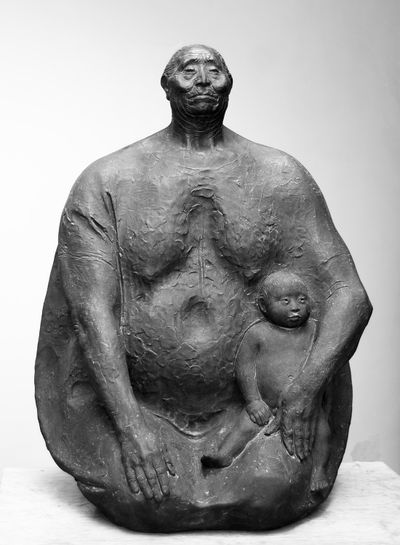
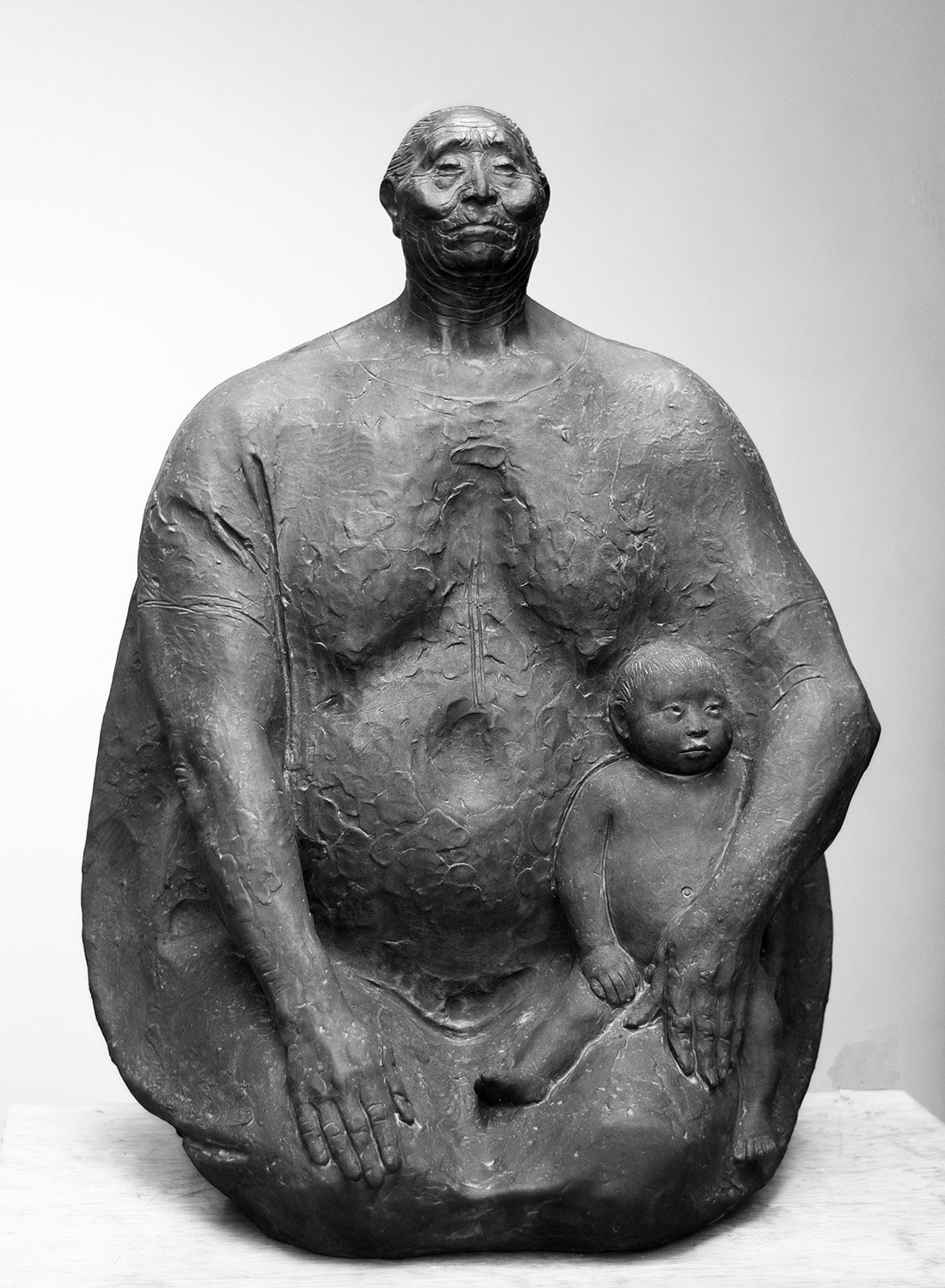
In Mexico, Zúñiga became associated with the broader movement of modern Mexican art, though his work remained distinct from the dominant tradition of muralism. While many artists of the period focused on large scale public narratives, Zúñiga concentrated on the intimate and enduring presence of the human figure. His sculptures, often carved in stone or cast in bronze, emphasize weight, balance, and proportion. Figures are typically seated or grounded, conveying a sense of permanence and quiet strength.
The female figure became a central subject in his work. Zúñiga’s representations are not idealized in a conventional sense but are rooted in observation and structure. His figures often reflect indigenous and mestizo features, connecting his work to the cultural identity of Mexico. Through simplified forms and careful modeling, he achieved a sense of monumentality even in smaller scale works.
In addition to sculpture, Zúñiga produced a significant body of drawings and paintings. These works often explore similar themes, focusing on figure, composition, and the relationship between form and space. His drawings, in particular, reveal a deep understanding of line and structure, capturing the essence of the figure with clarity and restraint. Painting allowed him to explore color and surface while maintaining the same focus on form.
A defining quality of Zúñiga’s work is its balance between abstraction and representation. While his figures are clearly recognizable, they are simplified and refined to emphasize essential qualities. This approach reflects his interest in the underlying structure of the human body rather than surface detail. The result is a body of work that feels both timeless and grounded in cultural context.
Throughout his career, Zúñiga exhibited widely and gained recognition in Mexico and internationally. His work is included in major museum collections, and he is regarded as one of the most important sculptors working in Mexico during the twentieth century. Despite his success, he maintained a consistent focus on his chosen subjects, refining his approach rather than pursuing dramatic stylistic changes.
Francisco Zúñiga Chavarría died in 1998. He is remembered as an artist who brought a profound sense of dignity and presence to the human figure. Through his exploration of form, material, and cultural identity, he created a lasting body of work that continues to influence sculpture and drawing in Latin America and beyond.
Represented By
Artworks by Francisco Zúniga