Guillermo Trujillo
Panama, b. 1927 – d. 2018
Guillermo Trujillo was a Panamanian painter born in 1927 in Horconcitos, Chiriquí, and is regarded as one of the most important figures in modern art in Panama. His work is known for its symbolic depth and its exploration of identity, mythology, and the cultural history of the Americas. Over the course of a long and prolific career, he developed a distinctive visual language that blends elements of figuration and abstraction, often drawing from indigenous traditions and spiritual themes.
Trujillo began his artistic training in Panama before continuing his studies in Madrid, where he was exposed to European artistic movements and classical techniques. This combination of local grounding and international influence shaped his approach to painting. While his academic training provided a strong technical foundation, he moved beyond traditional methods to create a more personal and conceptual body of work.
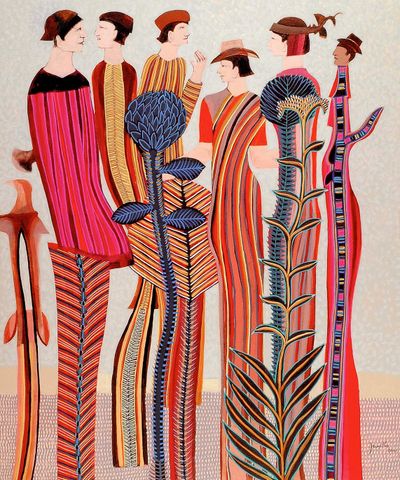
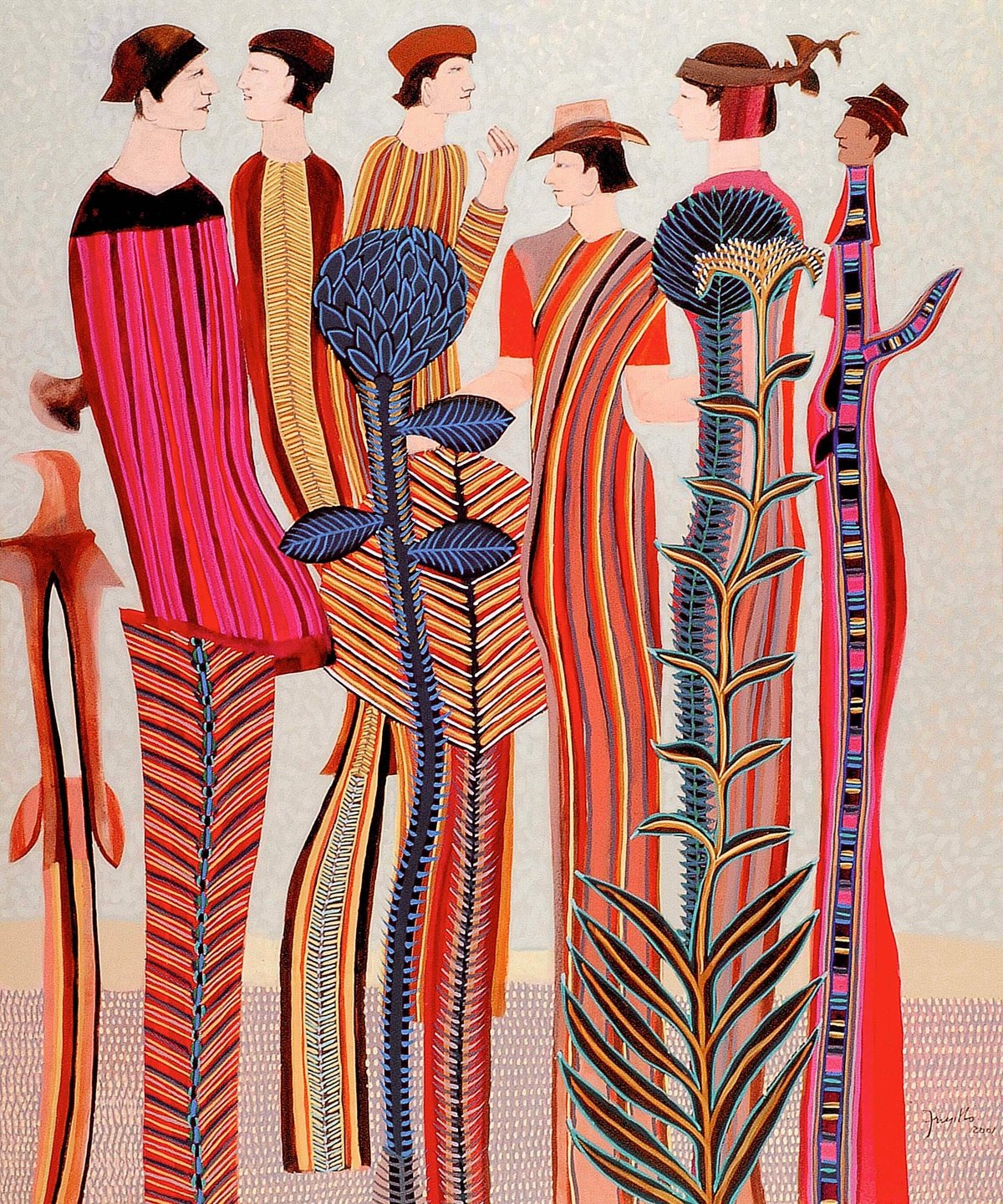
A defining characteristic of Trujillo’s art is its symbolic and often enigmatic imagery. His paintings frequently include human figures, animals, and hybrid forms that suggest transformation and connection between different states of being. These elements are not presented as literal representations but as part of a visual language that reflects broader ideas about origin, spirituality, and cultural continuity. His work often references pre Hispanic cosmologies and the relationship between humanity and nature.
Color plays an important role in his compositions. Trujillo often worked with strong contrasts and bold tones, creating a sense of intensity and movement within the painting. At the same time, his use of color is carefully controlled, contributing to the structure and balance of each composition. His surfaces often reveal layers of paint, adding depth and complexity to the work.
Throughout his career, Trujillo maintained a consistent interest in themes related to identity and history. His work can be seen as an exploration of Latin American experience, addressing questions of cultural heritage and the blending of influences over time. While his imagery is often symbolic, it remains connected to a sense of place and to the broader narrative of the region.
In addition to his work as a painter, Trujillo was an important cultural figure in Panama. He contributed to the development of the arts through teaching and participation in cultural institutions, helping to shape the artistic environment for future generations. His influence extended beyond his own work, reinforcing his role as a central figure in Panamanian art.
Guillermo Trujillo died in 2018. He is remembered as an artist whose work combines technical skill with conceptual depth, creating images that are both visually striking and intellectually engaging. His legacy lies in his ability to merge tradition and modernity, producing a body of work that continues to resonate within the context of Latin American art.
Represented By
Artworks by Guillermo Trujillo